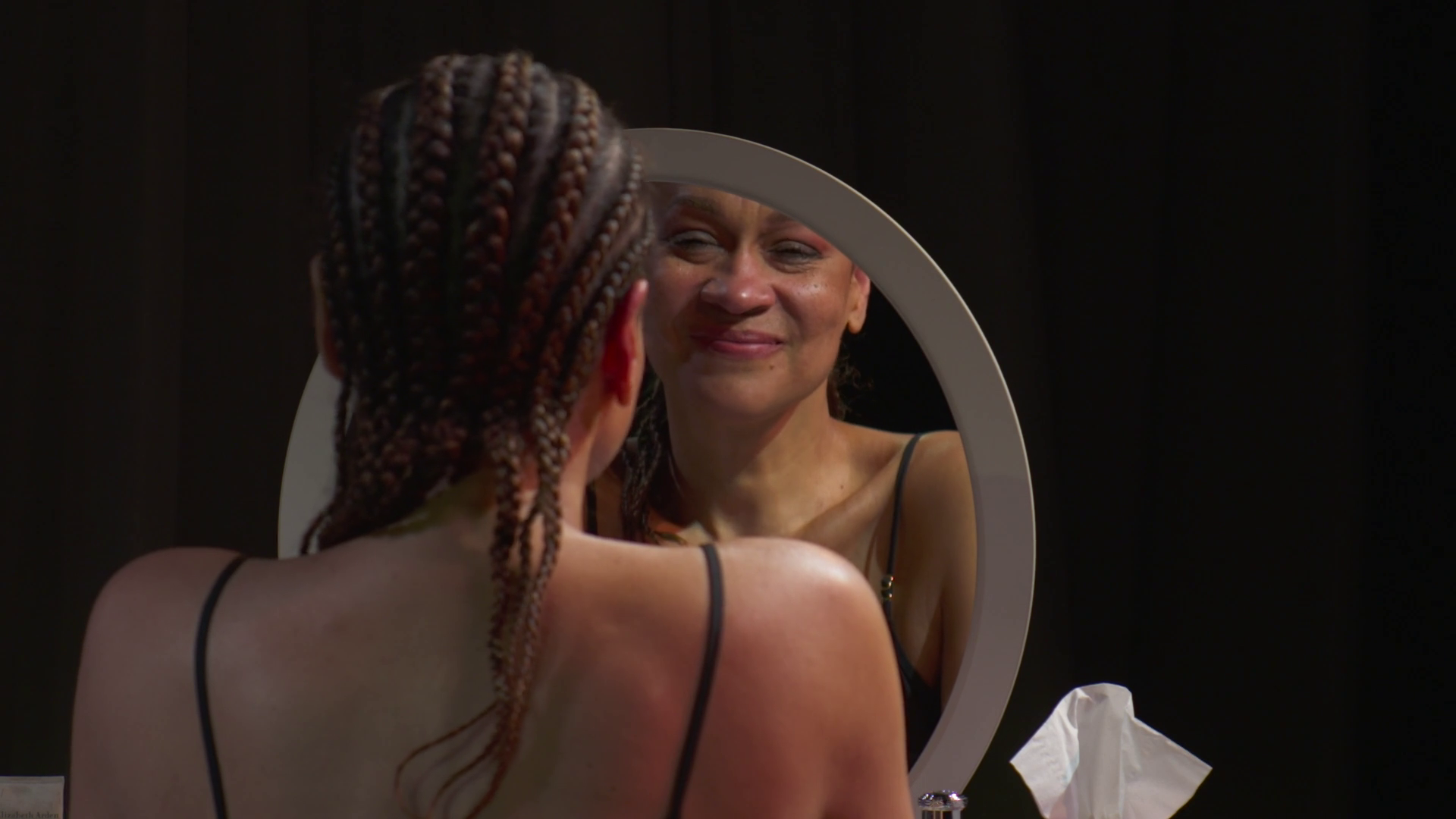
Sunday, 27 November 2022

Madame Bovary, est mort… The Massive Tragedy of Madame Bovary, Jermyn Street Theatre


Every tragedy can have a silver lining…

John Nicholson’s approach to Flaubert’s genuinely iconic heroine is akin to Tom Cruise’s to the Mission Impossible franchise, he, or rather his cast, are genuinely hanging off the side of an airplane in front of our very eyes, frequently breaching the fourth wall in ways that carry potential danger both in terms of narrative cohesion but also audience ad-libbing. At one point the action is stopped and Dennis Herdman, aka Ratman 1 and  various Emma Bovary lovers, asks for a show of hands of those who have read the book, about half of us raised ours and he quickly pointed at me to ask what my favourite part was, “I love the bit with the hamsters” came my reply, cue side-eyed response as the cast discussed whether we were just pretending to be well-read.

Nothing was going to throw panto-hardened Mr Herdman though and it is indeed a valid question for this play works both as a stand-alone comedy but also as an examination of so many nineteenth century heroines who loved and lived only to face the ultimate penalty. In another section the cast discussed the inevitability or otherwise of Emma’s fate, with the actress playing her, Jennifer Kirby (late of Call the Midwife but also the RSC, and it showed), saying that she wanted her character to have agency which is very much how Flaubert challenged his audience in 1856. I was reminded of Tom Stoppard’s Rosencrantz and Guildenstern are Dead, in which he added substance to two minor and easily dismissed characters from Hamlet to show what choices any of us have. In its own way, Nicholson’s play is closer to his source material but then there is so much to work with, Emma Bovary is a character written with substance, as well-detailed as any of the descriptive passages in the “realist” novel.

This play is realist only to the extent that its players know they are in a play and, have to make decisions that honour their characters. Other than that, it is a rip-roaring pantomime that looks to blow the narrative off course through the introduction of two rat catchers, or Vermin Termination Officers, played by Dennis Herdman and Sam Alexander. Ratman 1 just happens to buy all of the arsenic in the chemists, a necessary ingredient for their new vermination business, leaving none left for the suicidal wife of the local GP/health officer. In the Ratcatchers’ room at the Golden Lion, Emma unfolds her tale to Ratman 1 and thus the play meets the book… and you wonder how the gap in tonality can be joined.

Jennifer Kirby - all photographs from Steve Gregson

The whole enterprise rests on a fabulous performance from Jennifer Kirby, who is with one brief exception, always playing Emma Bovary throughout and grounding events in a version of the character that exists in both comedic and tragic variations. Her delivery is strong and the classical background pays dividends along with her physicality as a well-cast Madame B. Her steadfast presence allows Herdman and Alexander to play the fool along with the marvellous Alistair Cope… who transitions from a man with a wooden leg to a pharmacist, inn keeper and a cow with ease.

Alexander plays Dr Bovary as an innocent largely unaware of the depth of his wife’s needs, he’s achieved his ambition of being a general practitioner in a small town but cannot fathom why she needs more, exhibiting what Flaubert described as “the natural cowardice that characterizes the stronger sex.” Emma’s needs, founded on her heavy addiction to romantic fiction and her search for the truest emotions described within, lead her not just to the many men played by Herdman, but also to fine fabrics and expensive clothes aided by the unscrupulous Monsieur Lheureux (Mr Cope), happy to extend her ruinous credit.

But it’s in her relationships with earnest local clerk Leon and wealthy gadfly Rodolphe Boulanger who’s scene riding in the woods with Emma as they consummate their attraction is performed through the means of prestidigitation, as flowers are pulled from under dresses, bunting from the Bovary bodice and red balls from hands and mouth… it’s the play’s party piece, and based on a show of hands at the start of act two, they did it all over again as Emma announces she has a lover… a lover.

Sam Alexander, Jennifer Kirby and Alistair Cope get medical...

IThankYou Theatre verdict: The theatre was full and, as this was not the press night, the audience were there with no other expectation than to be entertained and the play certainly succeeded on that front. It’s a tricky path to “find the comedy in tragedy” but I think, in the end, the play finds the tragedy in comedy too; it’s a celebration of a book we all should read and in the hands of these four marvellous actors, it is the perfect pantomime for those who seek integrity in their heroes and villains.

Marieke Audsley directs with authority and clearly has the team on stage playing for each other, as we’d say in soccer and props also to Amy Watts stage design (see what I did there?) for an innovative set that allows the actors to chalk up signs, poems, ducks and record players – a needle drop of Noel Harrison singing Michel Legrand’s Windmills of You Mind (written for the Thomas Crown Affair) being especially welcome.

I’d say: **** Fearlessly funny around and not about the story, with a sympathetic Emma in Jennifer Kirby, humour as well as longings all intact, as she looks to the future now, it’s only just begun.

The play runs until 17th December and you can order via the Jermyn Street Theatre website here.

Flaubert is further examined in the JST’s forthcoming Promise Season with the debut play by historian Orlando Figes.  The Oyster Problem tells the story of the French novelist’s catastrophic search for a day job. 

New energies are flooding through Jermyn Street and 2023 promises to be very interesting indeed!

Sam Alexander and Dennis Herdman: Buckle up, it's going to be a bumpy ride!


Thursday, 1 September 2022

Songs from the wood… Jessie Buckley and Bernard Butler, Home Farm, Elstree, Herts

This was one of the most complete vocal performances I’ve ever seen, not just in a woodland setting but in any auditorium. I don’t often cry at gigs but, in amidst the smiles, I was a goner. These are songs in the great tradition, stories to stir the soul and fearless performers holding out their hearts to an audience willing to return that trust with unconditional engagement. If you went down to the woods today, you will have been charmed.

Technically this was a gig but it was also some of the most dramatically theatrical music I’ve heard live. It’s hard to resist the superlatives when trying to describe what we heard and saw… all I could think of saying to Butler and Buckley was “brilliant” much in the manner of Paul Whitehouse’s character in The Fast Show but gradually a word cluster of expletive-laden praise resolved itself down to a more structured appreciation and the Word is Love.

They say that most people stop listening to new music past they age of 33 in which case I and the attending “Whispering” Bob Harris are freaks – in the nicest possible way Bob. Jessie Buckley and Bernard Butler’s album, For All Our Days that Tear the Heart, isn’t just another new album I’ve listened to, it’s one that has moved me in ways that make this old heart of mine sigh, cry and smile like a fool. I’m head over heels for this album, falling hard for its irresistible mix of past, present and future, songs that do indeed celebrate all our days with plaintive echoes of Joni, Sandy, Nick, John Martyn, Lou Rhodes, Terry Callier, Jeff and Tim, Bert and Anne, any number of Wainwrights, songs with a new alchemical potency.

The venue

Bernard Butler, the man with the best hair in rock, as Jessie announced, is also one of the best collaborators and simply one of the best musicians to emerge from the 1990s. He has forged a varied career on his own or in collaboration with the likes of Dr Catherine Anne Davies (aka The Anchoress), In Memory of My Feelings (2020) and Sam Lee, Old Wow (2020). I watch a lot of silent films with improvised music and seeing the act of collaboration taking place between the players and the screen, the audience and each other is to watch creative confidence and generosity in action.

Butler always allows his collaborators centre stage, steering them to their own conclusions, with flourishes of guitar, arrangement and production bring out the best of the writing, performance and personality.

The pandemic bought Jessie Buckley and Bernard together and it took only a few seconds of the sample of The Eagle and the Dove to make me pre-order the album. Jessie is one of the finest actors of her generation, Oscar and BAFTA nominated already for The Lost Daughter and recent winner of an Olivier Award for Sally Bowles in Cabaret. I first saw her at the Globe Theatre, Miranda in The Tempest, not long after the graduated from RADA. She has unique energy and her gifts are prodigious, hidden behind an honest modesty and fearsome work ethic.

Lost in music (photo from video someone posted on YouTube...)

Tonight, she said she wasn’t sure whether Bernard would want to carry on after their first exchange of ideas but, to quote Florence Shaw of Dry Cleaning (second favourite album of the year), it was an instant yes! The results we’ve heard on vinyl and CD but tonight, after a rather fine hog roast, we were led into the darkened woodlands of Home Farm to seats made of straw bales and a stage lit up against a backdrop of hundred-year-old trees with the occasional moth and bat catching the light to add to the atmosphere.

Then on stage they trouped, as if from nowhere, Butler on guitar and effects, Misha Mullov-Abbado on upright bass as warm, string and fluid as Danny Thomson, Sally Herbett illuminating all with a one-woman string section and the most emotionally intuitive percussion from Chris Vatalaro. There were also two backing singers who helped start things off with a three-part harmony on the acapella start to The Eagle & the Dove. From those first notes onwards, it was clear that Jessie Buckley has perfect emotional pitch in addition to everything else. She knows exactly how to get the most out of her remarkable tonality and strength and boy can she sell a song…

Her control is remarkable as is her power, on For All Our Days That Tear the Heart she belts out so loud and clear she held the microphone well away, all was clear and true to jaw-dropping effect. I didn’t hear a single off note or even felt her straining at any point; rock and roll “head” vocals with jazz, folk and musical/theatrical styling and restraint. Every song is a story and Buckley acts as well as performs leaving tears and, in this close-nit audience, a feeling that we’re almost intruding.

Raw Power, not in the Iggy sense but, more so!

I Cried Your Tears was a prime example, with febrile, spine-tingling accompaniment from Butler who barely touched the strings… before Jessie brought in the most delicious of melodies.

But what does it matter: a painter, a thief?

The sin that was taken wasn't yours to keep

She talked the first line, whispered the second and as the verse progressed was in full voice.

But how can I return to the night that I stole

Into the arms of your lover who gave you your soul?

And I cry your tears 

This was remarkable mix of so much technique all driven by the need to express these emotions. What began as a private collaboration has now reached out and touched the hearts of so many and I mean every word. Jessie said that she wanted the album to feel like an old chest of photographs you find in a dusty room and surprise yourself by going through these new discoveries, experiencing emotions new and old. As a mission statement that’s pretty bold, as a project she and Bernard have been miraculously successful.

The album is uncanny. Everything works, she’s killing us softly.

For a self-professed “actress who sings” Jessie knows how to work a crowd and we were invited to singalong with Footnotes on the Map with Bernard providing the lead, and by the end of this song all discipline was lost and people rushed to dance at the front as Jessie stepped off stage amongst us.

For the encore a breath-taking cover of Bob Dylan’s Just Like a Woman was followed by the live debut of the highly appropriate Stars, followed by an emotional Catch the Dust, as the two hugged each other at what looks like the end of the tour.

I sincerely hope that this is not the end and that Jessie finds time to play more with Bernard but they’ve already caught lightning in a bottle once and for that we should be thankful. Tonight, we were privileged to see how it was done.

An enriching evening I won’t forget. *****

Thank you both!

Saturday, 6 August 2022

Well met by moonlight… A Midsummer Night’s Dream, St John’s College Gardens, Cambridge Shakespeare Festival

The cast and director, with apologies for nicking this from Rob Goll's Twitter!

"I have had a dream, past the wit of man to say what dream it was."

This play is all about transformation and driving into the unknown, finding a parking space and walking through St John’s ornate gates into their secluded gardens, the process began before we even sat down. There were families with picnics, strawberries and champagne, a proper varsity audience sat on the lawn, groundlings all, with everything all apart with the scenery. As dusk progressed the gardens changed shape, stage lighting forcing shadows ever deeper against the hedges and trees becoming forests… as Bottom became an ass.

This was my first time live with A Midsummer Night’s Dream, sure I’ve seen the 1909 silent version with Delores Costello, Drew Barrymore’s grandmother, and the Trevor Nunn RSC televised version with Helen and Diana… but nothing prepared me for this complex comedy to be so warm and welcoming. Directed by Matthew Parker this is truly delicious theatre with each and every player literally running themselves into the ground in service of the story; all encouraged to become expanded versions of themselves as combinations of Athenian legends, sprites, fairies and donkeys. Tonight, they made their own myths and were absolute legends.

Parker is always such a spatially aware director and he used the setting perfectly as the players mostly ran from and onto the stage, round the gardens out of sight and round the corner to re-emerge in different character. Most wore gym shoes or pumps as both Matthew and esteemed Artistic Director Dr David Crilly would say (Manchester and Liverpool working so well together), which served this pacey parkour perfectly, creating an impression of vast space around the performance area, turning the gardens to forest, helping the present tumble into the past, as the audience melted into myth drawn in by both the rhythms of words and voices.

The stage is set, the house was full and the strawberries and champagne in flow.

I can see why this play is so pleasingly regarded as its complexities are perfectly balanced and there are three main strands that we can see increasingly tangle only to surely straighten as the narrative concludes. For all its confusion and chaos, it is a very well-balanced narrative that leaves customers and characters satisfied but only after we all put in the hard yards.

Events start off in ancient Athens a place few Englishmen had visited in the 1590s but which lived in the imaginations of the play-going literati. Theseus, the Duke of Athens (Edmund Fargher) is preparing for his marriage, complete with four-day festival, to Hippolyta (Alex Andlau) when the nobleman Egeus (Rob Goll, who’s Bottom we’ll see a lot of) who is trying to arrange a marriage for his daughter, Hermia (Tessa Brockis). The contenders are Demetrius (George Barnden), father’s preference and young Lysander whom daughter loves.

Lysander is usually played by Aneurin Pritchard who injured himself a short while before tonight’s performance to be replaced by associate director David Rowan who, text in hand, performed a miracle of his own that somehow felt part of the Dream… there’s magic afoot with this event.

Under threat of death if she refuses to marry Demetrius, Hermia and Lysander plan their escape but not before telling Helena (Nadia Dawber) of their plan and she, being in love with Demetrius, tells him, hoping to shift his opinion. But no, Demetrius follows on after the couple and poor Helena follows him.

In the woods there is an argument between the fairy king, Oberon (Mr Fargher, again) and his queen Titania (Ms Andlau, also again) who are arguing over custardy of her Indian changeling causing her husband to plan a revenge. He calls on his "shrewd and knavish sprite", Puck (Amy Blanchard) to help him concoct a magical juice derived from a flower called "love-in-idleness", which applied to the eyelids of a sleeping person, makes them, upon waking, fall in love with the first living thing they see. Oh, what could possibly go wrong with that plan…

Meanwhile a third strand arrives in the form of an Athenian acting troop, amateurs who are in the forest to plan and rehearse a play for the wedding. They are played again by the aforementioned crew all of whom relish the opportunity to create additional characters and who are quickly submerged as the awkward Flute (David Rowan, text still in hand, a real trooper), the shy Starveling (Mr Barnden), the energetic Snout (Ms Brockis), the oddly gaited Snug (Nadia Dawber, straight from the Ministry of Silly Walks) and the oafish Bottom (Mr Goll) who is by nature exactly what his name suggests. They are marshalled by the endlessly impatient Quince (Meg MacMillan) who just wants to put on a good show for Theseus of the play what he wrote: The Most Lamentable Comedy and Most Cruel Death of Pyramus and Thisbe.

Now then, to cut a long story short, the potion gets applied to the right person and then the wrong person, the right person wakes up and falls in love with the wrong Donkey (yes) whilst the wrong person falls for another wrong person who is already in love with another wrong person anyway. As love-sick flies are we to the Gods or at least the Fairies…

It’s a riot and as my daughter pointed out whole families were laughing including the children which is always a mark of Shakespeare done well. It would be unfair to pick out individual cast members - every one of them excels! - but you have to admire Amy Blanchard’s Puck, whose movement is exceptional, jumping on Oberon’s back and in perpetual motion, laughing at the confusion caused. Needless to say, Mr Goll’s Bottom is indeed impressive, surely one of the funniest parts in Shakespeare (sorry, I'll stop...), especially when played the Yorkshire way, whilst Nadia Dawber get’s laughs for her physicality as well as her seemingly hopeless devotion to the indifferent Demetrius.

The multi-tasking is seeminlgy effortless, they all dance and sing, whilst the team work is so strong as we've come to expect from Mr Parker; all play hard but supportively and with joy! Thank you all for entertaining us!

Take a bow. Apologies for my iPhone.

IThankYou verdict: **** This play hits all the right notes and in the designated order, fast and furious fantasy and undoubtedly one of Bill’s best. But this is a truly immersive experience, from a time before such notions were invented, Parker’s Band cover all of the ground, emotionally, contextually and physically… there’s not a nuance unturned and you will respond cerebrally and viscerally. It’s mood-altering and not just a legal high but one that should be made compulsory!

The play continues up until 27th August and I would urge you all to go sit with picnic, turn off your phones, relax and float downstream with this wonderful Dream.

You can book direct from the Cambridge Shakespeare Festival site and you won’t regret it.


Saturday, 11 June 2022

The state we’re in… Cancelling Socrates (2022), Jermyn Street Theatre

Even if one is unjustly treated, one should not return injustice…

There are many ways of addressing the condition of our political discourse but it’s hard to think of one as eloquently elegant as Howard Brenton’s new play. Using contemporary writing and accounts, Plato's dialogues for a start, he uses Socrates own reasoning to examine the concepts of justice and duty. No spoilers but, even at the age of 71 the old philosopher was still claiming that he knew nothing and was working every day to understand the nature of self and service. As a historian this is way out of my period and in terms of political thought I started with Hobbes and ended with Marx, but there’s always something to be learned from the birthplace of democracy and critical thinking.

In 399 BC Athens was recovering from a plague and the political aftermath of war with Sparta and the brief rule of the Thirty Tyrants. At such times the last thing anyone needs is a guy asking too many fundamental questions and so Socrates was sent to trial for a variety of crimes including corrupting the youth of Athens, and the crimes of Asebeia, the "desecration and mockery of divine objects", for "irreverence towards the state gods". The movement against him was organised by the young poet, Meletus, about whom history records little. Socrates, according to Plato, seemingly ran rings around him in the court but not well enough to convince the majority of the 501 jurors gathered to bear witness. They decided against the philosopher and whilst the result may not have been 52% to 48%, or 211 to 148… the same forces of confusion, habitual anger and confusion were at play.

Sophie Ward, Robert Mountford, Jonathan Hyde & Hannah Morrish - all photography by Steve Gregson 

Brenton’s Socrates is played with good-humoured patience and a questing innocence by Jonathan Hyde who delivers the philosophical complexities with relish, the philosopher’s method of assuming nothing and examining everything. There’s not a word out of place in this script and as director Tom Littler commented after the show, Mr Brenton has written a few of these. Tom and the performers make the absolute most of this dialogue; the arguments are complex but complete and it’s a very satisfying, almost intimate debate focused between the players and the audience at the JST.

Given that this was press night, the equivalent of the Glasgow Empire for a home-counties stand-up comedian, there were laughs aplenty and an uproarious ovation at the end. Like Rafael Nadal wins trophies and Mohammed Salah scores goals, Howard Brenton crafts his work with a light heart and focused complexity with hidden meanings smuggled through his dialogue like a golden thread amassing volume as the narrative progresses.

Robert Mountford plays Euthyphro, a relative of Socrates who meets him outside the court at the play’s start. Euthyphro is not daft but he finds Socrates frustrating not least for his refusal to wear shoes or bathe regularly but mostly because he cannot fathom his relentless questioning. Like most of us, Euthyphro accepts the habitual realities of Greek society and religion and doesn’t want to have to keep thinking about the nature of this reality.

Robert Mountford and Hannah Morrish Photography by Steve Gregson

Euthyphro is like a long-suffering Doctor Who assistant used to help explain the nature of Greek beliefs as well as the challenge Socrates presented to them. He despairs of Socrates’ approach to his trial; the old thinker just doesn’t seem to take the experience seriously at all unlike the more decided minds railed against him.

They say Pericles caught democracy from you in bed.

Sharing this frustration are Socrates’ long-standing mistress Aspasia (Sophie Ward) and his current wife Xanthippe (Hannah Morrish) who both understand their man and the importance of their co-existence – among his other fancies – in keeping the philosopher out of too much trouble. Aspasia is the more experienced and pragmatic of the two who operates very effectively within male-dominated Greek political society with an appeal to men’s hearts and minds… all points in between. 

Xanthippe, the mother of his children, is the more theocratic, aligned with the part of her husband that still accepts some form of godly universe albeit one that he doesn’t understand. She has the certainty of belief though just as Aspasia does on secular matters and so both are perfect partners for the man who has everything in terms of questions.

Jonathan Hyde and Sophie Ward

Together they try to direct their man towards a compromise but he’s not taking the jury’s verdict lightly and only makes things worse through his honesty. He ends up on death row and his exchanges with the jailer, played by Robert Mountford multi-tasking superbly as the down to earth everyman who in the modern day may possibly come from Essex and have voted to take back control. If the first half of the play was Socrates against authority, the second is very much the intellectual versus the masses as represented by his affable but irritable goaler who has clearly more than had enough of comfortably well-off philosophical experts.

IThankYou Theatre rating: ***** A pretty much perfect theatrical experience that really allows audience and cast to connect with ancient and modern philosophy at a time when we all need reminding just why society, democracy and culture matters.

Brenton picks his targets with unerring accuracy and hits every one with emphatic skill, entertaining us with every home truth nailed and each complexity left hanging in the air for the penny to gently drop in front of us. It’s another to add to Brenton’s eclectic and lengthy catalogue from Christie in Love (1969), The Romans in Britain (1980), Pravda (with David Hare in 1985) and, more recently, the outstanding Anne Boleyn (2010) with marvellous Miranda Raison as Wife No.2 at Shakespeare's Globe.

The play is part of the JST’s Outsiders Season and I look forward to the next instalment. In the meantime, Cancelling Socrates runs until the 2nd July and will be a very hot ticket so I’d advise you to book as soon as you can!

I’ll leave the last word to Howard: Sartre said that there are three kinds of writers: writers who write for God, writers who write for themselves, and writers who write for other people… I write for other people. The play doesn't reside in heaven, or in a library. As a dramatist, that's your instinct: without other people, the play doesn't exist.


Wednesday, 3 November 2021

The witch is back… Vinegar Tom, OVO at The Maltings Theatre

All photos by Pavel Gonevski

"Some people think little girls should be seen and not heard, But I think… OH BONDAGE, UP YOURS! 1-2-3-4!" Marianne Joan Elliott-Said aka Poly Styrene, April 1977

Caryl Churchill wrote this play in 1976 drawing allusions between the treatment of women even after early equalities legislation and the witch hunts of the seventeenth century, we watch it now and wonder how much has really changed. With new attacks on feminism from unexpected quarters and a government intent on reducing its own accountability whilst pushing the individual’s responsibility to “behave”, are we heading backwards? Is it time for women to “make more noise” again?

It certainly doesn’t feel like Churchill’s cries from the heart are in anyway anachronistic and the sheer, vicious illogicality of the witch hunt – the ducking stooled innocent if drowned, guilty if alive or the pin-pricked witch who either bleeds or hides her pain – reflects so much about the collapse of reason over the last ten years of global politics. Hyper-Normalisation and the Digitally Divided, a new Age of Conspiracy… modern medieval minds mystified by incessant waves of social media myth and legend as the men in black laugh.

Oh, nobody sings about it, but it happens all the time…

Matthew Parker’s direction is as theatrically fertile as they come and he has focused this 45th anniversary production on the 1640s, the Civil War and the time of Witchfinder General Matthew Hopkins who may have been responsible for the deaths of as many as 300 women between 1644-7. Even for the time this was extraordinary – in times of flux, all kinds of madness persist in the search for someone to blame, other than the powers of darkness.

Which is where we begin as Alice, played by the extraordinary Emilia Harrild, who combines fierce intelligence with the anger and vulnerability of youth, actually dances with the Devil, or at least a man who claims that he is (the multi-faceted Jon Bonner). It’s a bruising exchange showing Alice’s bravery as well as passion, yet she can’t connect to the man, who feels able to – literally – put her down. But he leaves his mark and she dreams of him…

Emilia Harrild

Alice lives with her mother Joan (Jill Priest, wonderfully spikey and expressive) who whilst she struggles to keep them both in food and drink relies sometimes on the kindness of neighbours, Margery (Cathy Conneff, spirited and yet fragile) and Jack (Alan Howell, as black-clouded sullen as most bass players) but their patience starts to wear thin as she asks for some yeast but Margery, struggling to get butter from her ailing cows, is now looking for a scape goat. Jack, as with Alice’s man in black, is a poor excuse for a man, constantly putting upon Margery, sexually harassing Alice and generally proving faithless. 

Jack isn’t capable of accepting responsibility for his own laziness and poor judgement, he even blames Alice for his erectile disfunction and pressed her to restore him… which, with a weary sigh, she does, only leading him to conclude that she therefore must be a witch. The play is not without humour – light and dark always perfectly balanced to often devastating effect in Mr Parker’s plays – and it comes naturally out of situations we can still recognise.

Betty (Lauren Somerville, who provides some subline counterpoint and harmonies), the young daughter of a wealthy landowner, refused to marry, is locked up by her parents whilst Alice’s friend Susan (Melissa Shirley-Rose, wining us over with her emotional clarity and honest confusion) is God-fearing and yet repeatedly pregnant… the women seek the help of herbalist and suspected witch Ellen the Cunning Woman (Lotte Davies, so funny in the closing duet and with a gut-wrenching cold-eyed look of terror for her character's hanging) who helps them with a potion for Alice to win back her dark lover and provides Susan, a draught to rid her of an unwanted baby… She is a “good witch” as the witch hunter Packer (Mr Bonner again, this time even purer, human, evil) later remarks, but the only good witch quickly becomes a dead witch in his practice.

Margery alarmed by her dying cattle and Jon mostly by Alice’s refusal to go with him, accuse Joan of being a witch and they too go to Ellen who provides then with a mirror in which they will find their truth… clearly, they only have themselves to see and blame but they persuade themselves that they see sorcerous Joan.

Cathy Conneff and Alan Howell see what they want to see

“Not for me to say one's a witch or not a witch. I give you the glass and you see in it what you see in it.”

Witch Master Packer arrives and is soon convincing the locals that the two women must be witches by whichever signal suits his agenda… fake news or not, fear leads folk to follow his judgement. Susan is so confused that she outs herself as a witch for her association with Alice even as she betrays her in her hysteria. Witch Finder Hopkins often travelled with a left-hand woman and here Emma Thrower is perfectly horrible as the deluded sidekick/enabler, the very bad, Goody. She also keeps great time on the drums.

Flavouring the action and adding real visceral impact are seven songs with lyrics originally written by Churchill added to new music written by composer Maria Haïk Escudero. We’d entered the performance space to PJ Harvey, from Let England Shake, and sure enough Matthew quotes the Abbotsbury Muse as an influence along with other women who are supernaturally talented, First Aid Kit (you must hear their version of Black Sabbath’s War Pigs!), Kate Bush, and Joni Mitchell… the last two, surely actually magical!?

The songs are performed by the entire cast and so we get part play/part gig and the most immersive and engaging experience you can expect with your socks on. Not only are the “band” exceptionally tight - and it must be so hard to play in character, that’s rubbing your tummy and patting your head really hard - but they have a charismatic lead singer in Alice/Emilia Harrild who knows how to front as well as sing. She also has the best haircut in Hertfordshire and plays the cello in Rome’s Colosseum, there’s nothing usual about her.

Priest and Davies selling it!!

The music is punchy and rocks authentically, bringing my old hero Poly Styrene to mind whilst also adding so much energy to the play’s central theme. Punk rock and punk play are both far from dead 45 years on! A splendid ensemble all of whom leave everything on the stage and deliver so many moments of magic proving that this woman’s work is never done when it comes to the dreaming. Wow.

The band/cast are all clearly having a ball and that’s another Parker hallmark, they play hard but also work hard to a woman and man throughout and there’s a creative camaraderie that undeniably reinforces their common purpose in proving the vibrancy, wicked humour and enduring quality of this play. 

IThankYou Theatre Rating: ***** Vinegar Tom delivers exactly what we have been missing these last 20 months – magical theatre but then, as Sir Elton almost said, the witch is back! 

Vinegar Tom plays until 6th November so please get in quick, details on their website, park on Level 2 of the Maltings multi-storey and you’re there! The Maltings is also a lovely airy venue and feels totally Covid safe so I would heartily recommend the whole enterprise to those who are returning in increasing numbers to live performance.


Tuesday, 15 December 2020

Oh yes it IS!!! The Gift, NHS Charities Together, Streaming now on Vimeo & Prime


In a year of “Hey kids, let’s put the show on right here!” this pantomime may very well take the biscuit or rather the mince pie. There are 44 performers not including musicians, stage and other crew, not to mention Director Adam Morley and together, they give us the pantomime we need and which so many families have been denied through force of circumstances. Watch this as a family and you will be enveloped in the warm glow of seasonal cheer which, despite the early onset of decorations, has been lacking until now.

Not any more Boys and Girls because the multitalented Michael Head has written a quick-fire mix of classic panto-memes (see wot I did there?) as well as a collection of classy earworms, some co-composed with Chesney Hawkes, who knows a thing or two about song writing. Michael also plays three parts – as if he wasn’t taking on enough – Santa, the wackiest Widow Twanky and Dick Wittington as a cab driver who talks non-stop as he takes our heroes across an ever-changing green screen of London featuring whales and a riot of out-of-context backgrounds. I'm sure he once took me from Waterloo to Camberwell when I'd wanted to go to Cannonbury, he just wouldn't go North of the river at that time of night...

Michael Head wants to tell you a story!

It’s a family affair too as Michael’s daughters, Polly and Livia, are at the heart of the action as two little girls looking for a Christmas Eve present for their mum, helped by their Dad (Mr Hawkes). They go to a library (Kensington obliged) and meet a singing librarian (Chesney’s daughter Jesse) who sings about The Magic of a Good Book accompanied by dancers and all the Hollywood Glamour you can expect in the current circumstances – maybe more Holloway, but, sure, that’s a fine road isn’t it?

A world of possibility, once you put your iPhone down… So, what’s your preference, fiction or reference?

Livia, Chesney Hawkes, Polly and Jesse Hawkes


Libraries spark the imagination and whilst Dad is oblivious to the song and dance – absorbed in a book called Wobbly Bits (which I must read….), the girls soon get drawn into another world after meeting a (really) Good Fairy played by Caprice Bourret (who else?) who gives them a magic ring for their mother’s present. All this is seen by the villainous gaze of the baddie named, for copyright-infringement-swerving reasons, Abanaza (Vas Blackwood on stonkingly good form!), who sets out to steal the ring only to be thwarted by Buttons (Joe Pasquale, who else?!) who tricks Ava-banana – a running gag - and heads off with the girls into the stacks.

Vas Blackwood is A-bonanza


There’s a fun chase enlivened by energetic dancers and music that suggests Mr Head spent a fair amount of his youth in raves; me too and I liked this! Where’s me long-sleeved t-shirt?!

There’s a lot of exposition and guests stars to fit in and we meet our Prince (not so) Charming (Dane Bowers, natch!) who takes part in Blind Date in the Woods hosted by Ben Ofoedu with compering provided by Sleepy aka Abz Love. Charming gets to check out (not so) Little Red Riding Hood (Sandi Bogle), a saucy Cinderella (Lydia Singer) and a wide-awake Sleeping Beauty (Reme Hannan) and there’s a lorra laughs as somebody used to say.

Blind Date: Abz, Reme, Ben, Lydia, Dane and Sandi!


The play’s essentially a series of sketches and the enthsiasm and joy – despite every damn thing – is a delight throughout. I mean, who wouldn’t want to see Captain Hook (Kieran O’Connor) confronting his issues of self-esteem, with a sympathetic Beast (Paul-D Stephenson), who’s been there, done that and come out the other side. Hook has been kicked out of his gang by Pirates led by Becky Hoyle, who are concerned that his values no longer align? Smee not me, but Smee (Luke Jordan Callow) explains it all in song, another cracker!

Anyone hungry? Here Widow Twanky (Mr Head again) has taken to baking in a big way helped by James Goodman and the esteemed Paul Danan, who could sell most people anything I’m quite sure. It’s time for one of the biggest showstoppers as Buttons makes the mistake of asking just why, she just “got to bake”? We switch to Twanky in Tina Turner hair and surrounded by dancers in Holy Trinity Church in Sidcup and whilst Mr Head is in fine voice, he also has some moves too. Seriously, worth the price of admission on its own!

The Great British Dame Off with messrs Danan, Goodman, Head and Pasquale


Back to the story and Buttons and the girls make their way to the Cave of Fear and an entrance guarded by former Shameless star Tina Malone who, apart from great timing has enough “wack” to be the host of the aforementioned Blind Date. Inside the cave we find one sad Ugly Sister (Myra Dubois) wondering whether Abanaza is the man for her…

Buttons and the children need to find the Fairy Party to get back to their Dad and, luckily, they meet the Fair Godmother (Vanessa Feltz… and it feels so right!) who, along with two reasonably good fairies Rhia Official and Nicole Michelle, point them in the direction of the “goodest” Fairy. Time for another set piece song and dance (filmed in London’s Jakata) as Caprice shows off her singing for the Fairy Anthem and dancers are intercut with the other characters having a ball, glass slippers or not!

It’s the feel-good hit of the Winter and all in that good cause. I watched it twice because I knew the family would enjoy it as well and that’s the way to do it as Mr Punch so wisely put it; for pantomime you need the collective experience of watching and laughing along. Oh YES you do!!

Caprice is a very Good Fairy


Everyone gave their time for free and all proceeds go to NHS Charities Together. It’s a heart-warming tribute to the people who have served us so well this year from a group of performers who will have seen their own careers put on hold. I look forward to seeing them all back on stage where they belong and I would urge everyone to donate a tenner and just enjoy their fun!

You can watch The Gift either on Vimeo on Demand or over at Amazon Prime.

IThankYou Rating: I just have to give this ***** with Christmas Bells on! For kids of all ages from one to one hundred!

Apologies to any of those I missed out - a superb effort from all of you!


Monday, 9 November 2020

Found in translation… 15 Heroines, The Desert/The War/The Labyrinth, Jermyn Street Theatre


It's typical of Ovid - the wittiest, naughtiest, cleverest writer of his age - that he should spot the chance to express himself through these lesser-told aspects of well-known myths. Forget Theseus - let's hear from Ariadne. Never mind Ulysses' journey- what about Penelope?

In his programme notes, JST artistic director, Tom Littler, discusses the origin of this project and how “imitative” translation, as defined by the poet Dryden, could bring out new elements of existing stories as opposed to what he described as “meta-phrasing”, more literal linguistic transpositions. A bit like literate jazz improvisation versus straight ahead replication of a “standard”; John Coltrane’s endless spontaneity versus Johnny Hodges, who led the saxophone section in the Duke Ellington Big Band in highly structured breaks.

Two thousand years ago, the Roman poet Ovid took the former approach in placing the side-lined heroines of Middle East and Mediterranean oral tradition, centre stage with a series of imaginary letters. These stories were so well known to every Roman and they persist to this day in many aspects of modern culture. One of the oldest books in my family is an Eighteenth Century edition of Ovid’s Metamorphises – featuring some of the characters referred to in these plays - but you don’t have to look far to find stories of Helen of Troy, Jason and the Argonauts, Theseus and the Minotaur.

Patsy Ferran as Ariadne


Having only recently studied an epic German silent adaptation of Helen from 1924 (based on Homer’s take…), I was well placed to contextualise some of the stories but the strength of this production is that you don’t need to know too much of the myth; these stories all resonate not just in the narrative content but also in the way the text connects to recognisable individual concerns. These are women devastated by loss, ignored by so called heroes – just “thugs” as Penelope calls them – who prefer the distractive glory of battle to their domestic responsibilities – and the chase of new loves to the woman left behind.

The plays were rehearsed, performed and filmed live at Jermyn Street Theatre in socially distanced conditions and all capture the intimacy and power of this unique venue. You can almost feel your knees pressing against the seat in front and sense the reactions of the audience packed around you: this is what we’ve been missing!

Remarkably, each piece was performed and filmed live in a single take and this freshness comes across so well as each actor is absolutely in the moment. So many plays though yet whilst each is so different, so is every performance and all are high quality, engaging, warm, sorrowful, funny and, occasionally frightening. The monologues are in three strands with the pays directed variously and expertly, by Tom Littler, Adjoa Andoh and Cat Robey.

Olivia Williams as Hypsipyle, the wife of Jason

The Labyrinth - the women who encountered Jason and Theseus.

Are you friends, are you foes… are you gods?

String by Bryony Lavery features Patsy Ferran as Ariadne, half-sister to the half man-half bull, Minotaur who is wrestling with the fact that her lover has just killed her brother. Ariadne is shocked as she turns to face us before realising that we’re hear to listen to her story. Lavery’s script is literate and witty – I loved the play on words especially when Ariadne “loses her thread” as she discusses the ball of string given to Theseus to prevent him getting lost in the Labyrinth. He found his way out and has gone far beyond yet she is the one now lost even with the string. Ferran is funny and heartfelt, a classical mix. 

Pity the Monster by Timberlake Wertenbaker has Dofia Croll as a fiery Phaedra, Ariadne’s sister, who marries her beloved, Theseus, also the killer of her half-brother… but, of course, she really loves his son Hippolytus. There are so many taboos broken by this woman but she is passionate in seeking “acceptance for desire…”.

Dofia Croll as Phaedra

I imagined you dead… in a nice way… 

I'm Still Burning by Samantha Ellis has Nathalie Armin as Phyllis, married to the son of Phaedra and Theseus, Demophon, another faithless man who forgets to return home after his adventures. Nathalie Armin delivers the poetic truths with passionate deliberations and has the best costume of the show with leaves and branches growing from her head: an excellent physical performance too. The play, as with the story, examines the “political” and Phyllis regrets not writing it all down before any man could; Ovid, Chaucer and the rest betraying her as much as her lover.

Nature is her goddess? Nathalie Armin as Phyllis

Someone in love, is always full of fear…

Knew I Should Have by Natalie Haynes features Olivia Williams as Hypsipyle, the wife of Jason, sat in her home office wondering if her king will ever return after taking up with a new lover on his quest for the golden fleece. It’s another powerful performance with Williams swinging from tender devastation to bitter anger whilst the modern trappings serve only to remind us of the loneliness of the lovelorn; eternally, “tears flow down your fake face…”

The Gift by Juliet Gilkes Romero has Nadine Marshall as Medea, the woman Jason deserted Hypsipyle for and who, herself is now abandoned by him. Honestly Jason, once you’ve had your way and your golden fleece, you’re just not bothered, are you? Medea is now hunted having for so long been the hunter and Marshall’s playing is so poignant.

Nadine Marshall as Medea

The War - untold stories of the Trojan War

You know what I’m like, I can get a little bit extra!

Our Own Private Love Island by Charlotte Jones takes the prize for the funniest play with Sophia Eleni on fire as the laddette, Princess Laodamia of Phylace, aka “Lady P” who is “Greek, innit?” This is the Mycenaean Wars via Middlesex with Helen guilty of having “… broken the Girl Code, ain’t no coming back from that!” It’s not hard to see these characters as being in some kind of reality TV show and with seemingly mundane concerns. Yet all tragedy is mundane and our girl worries about her Prince going to war; “fight for your life and not to win”. Whatever you do, don’t be the first Greek to set foot on the Island of Troy…

Sophia Eleni: Greek, innit?

The Cost of Red Wine by Lettie Precious see Ann Ogbomo as a ferocious Odenone, so in love with Paris and so disappointed in him for choosing Helen. She had sheltered him before and there are clear indications that not only is Helen as “step up” in the world she is also white and Paris is “moving on” in a racially segregated world. It’s a stunning performance from Lettie who leaves nothing left on the stage as she hates and rages always in love… stunning!

Love and loss: Ann Ogbomo 

Perfect Myth Allegory by Abi Zakarian sees Jemima Rooper as Briseis, concubine of Achilles, and a major reason, through no fault of her own, why her man and Agamemnon (Helen’s husband) argued. In this take of men fighting over as much as for women, she takes “joy in being free to wander into a history, I also will make.” She is able to take control of her feelings and use the men’s to her advantage. 
Jemima Roper

Will You? by Sabrina Mahfouz takes another dramatic change of pace and venue as we see Rebekah Murrell as Hermione, being interviewed by the Police in connection of her former husband’s murder of his mother. Hermione’s life is complicated… the only child of Menelaus, and Helen, she was promised to Achilles' son, Neoptolemus even though she truly loved her cousin, Orestes.

Murrell is so assured as she roils her own in the interview room and the narrative soon switches from her character’s resilient confidence to the darker tones of arranged marriage among the upper classes and the marital rape that ensued. The Police support the pointlessly rich and “… we are both as bad as each other”.

Rebekah Murrell 

If you won’t come home for your wife, come home for your sheets…

Watching the Grass Grow by Hannah Khalil features a superb turn from Gemma Whelan as Penelope, waiting for her husband Ulysses to return. Penelope in this instance is a home-working dress-maker whist her man has gone on a team-building exercise, yes, even in the midst of lockdown… Another script that emphasised the eternal truths of love and lies, Whelan’s adept turns of tone brought the tragedy out from her concerns for emails, texts and work/life balance.

Gemma Whelan waiting for the man

The Desert - women going their own way

The Striker by April De Angelis has Indra Ove as an embittered but resilient Deianaria, bemoaning the fall from grace of her husband Hercules Nevile… a fading soccer star who has played away once too often and become “… more like a guest than a husband.” Deianaria has a noble heritage and won’t be shamed as she plans the ultimate reckoning.

Indra Ove, a WAG scorned

In his arms I blossomed… and yet, it was not enough time – the Gods cannot bare to see us happy! 

The Choice by Stella Duffy sees Rosalind Eleazar as Dido, a princess of Lebanon, married to her uncle at 14, “a valued bride…” and raised to rule alongside her brother, Pygmalian. She escaped it all to found Carthage at the age of 25 which is verging on the upper reaches of over-achievement! She gives shelter to Aeneas after he arrives following the end of the Trojan Wars… the two fell for each other deeply. 

The Gods call Aeneas away to Rome – a poor choice versus glorious Carthage – and Dido resolves to settle her own course, divine intervention be damned: “my life, my love, my city my choice…”

Rosalind Eleazar

“I can understand why for some people it might be weird… I’m not an idiot.” 

A Good Story by Isley Lynn features Eleanor Tomlinson as Canace, daughter of Aeolus, god of the winds as she’s interviewed on television about her relationship with her own brother Macareus… which comes as quite the bombshell if you’re not familiar with the story. She has six sisters and seven brothers… and it’s funny/discomforting to hear Canace voice her position with modern sensibilities threaded through a well-worn situation in classical myth! Tomlinson with her delicate nervousness in character, gives one of the most affecting performances for what is in every way a tragedy.

Eleanor Tomlinson

To satisfy our honour, kill your husbands

Girl on Fire by Chinonyerem Odimba sees King Danaus’ daughter Hypermestra, played by Nicholle Cherrie, tasked, along with her 49 sisters, with mariticide… “the knowing lunacy of men!” She is the only one to refuse this slaughter, and waits her day in court having spared her husband, Lynceus. 

The language, as throughout the plays is quite delicious, “I get to write only one letter to you… So much to say, so little papyrus.” Throughout there is an intake of breath repeated off stage, whilst Nicholle gets to sing and has such a lovely tone, I may well have wiped away a tear…

Nicholle Cherrie


I See You Now
by Lorna French has Martina Laird as Sappho, singer and poet for the ages and perhaps the most famous and misunderstood of these women? Here she has come to “the Mother Country” from Trinidad as a 16-year old… years later, she has given up everything for love but must decide whether he adopted country is worth her sacrifice.

Has it come to this? Mere days after Trump was deposed you hope not.

I ripped up pictures of my sister in her nurses’ uniform tending to Britain’s sick for years and years…
Martina Laird

15 Heroines is a suitably epic and richly satisfying journey through these endless concerns and timeless characters, temporally recast in our modern setting. All hail Ovid’s invention but also everyone involved from the players, playwrights, and directors to the whole crew. This is a beacon of welcome hope for an industry under siege and, as with Carthage, one that has many glories to come!

The shows will stream at designated performance times from 7.30pm today, Monday 9th to Saturday 14th November. So, get set for a week of wonders!

The War Mon 9 7.30pm; Thurs 12 7.30pm; Sat 14 3.00pm

The Desert Tues 10 3.00pm; Weds 11 7.30pm; Friday 13 7.30pm

The Labyrinth Tues 10 7.30pm; Thurs 12 3.00pm; Sat 14 7.30pm

Tickets are £20 per household/device and are on sale now from the Jermyn Street website.

IThankYouTheatre rating: ***** Unmissable lockdown theatre, switch on your screen, dim the lights and get swept away by the grandeur of these performances and these naturalistic tales of epic humanity!