Showing posts with label Tom Littler. Show all posts

Saturday, 11 June 2022

The state we’re in… Cancelling Socrates (2022), Jermyn Street Theatre

Even if one is unjustly treated, one should not return injustice…

There are many ways of addressing the condition of our political discourse but it’s hard to think of one as eloquently elegant as Howard Brenton’s new play. Using contemporary writing and accounts, Plato's dialogues for a start, he uses Socrates own reasoning to examine the concepts of justice and duty. No spoilers but, even at the age of 71 the old philosopher was still claiming that he knew nothing and was working every day to understand the nature of self and service. As a historian this is way out of my period and in terms of political thought I started with Hobbes and ended with Marx, but there’s always something to be learned from the birthplace of democracy and critical thinking.

In 399 BC Athens was recovering from a plague and the political aftermath of war with Sparta and the brief rule of the Thirty Tyrants. At such times the last thing anyone needs is a guy asking too many fundamental questions and so Socrates was sent to trial for a variety of crimes including corrupting the youth of Athens, and the crimes of Asebeia, the "desecration and mockery of divine objects", for "irreverence towards the state gods". The movement against him was organised by the young poet, Meletus, about whom history records little. Socrates, according to Plato, seemingly ran rings around him in the court but not well enough to convince the majority of the 501 jurors gathered to bear witness. They decided against the philosopher and whilst the result may not have been 52% to 48%, or 211 to 148… the same forces of confusion, habitual anger and confusion were at play.

Sophie Ward, Robert Mountford, Jonathan Hyde & Hannah Morrish - all photography by Steve Gregson 

Brenton’s Socrates is played with good-humoured patience and a questing innocence by Jonathan Hyde who delivers the philosophical complexities with relish, the philosopher’s method of assuming nothing and examining everything. There’s not a word out of place in this script and as director Tom Littler commented after the show, Mr Brenton has written a few of these. Tom and the performers make the absolute most of this dialogue; the arguments are complex but complete and it’s a very satisfying, almost intimate debate focused between the players and the audience at the JST.

Given that this was press night, the equivalent of the Glasgow Empire for a home-counties stand-up comedian, there were laughs aplenty and an uproarious ovation at the end. Like Rafael Nadal wins trophies and Mohammed Salah scores goals, Howard Brenton crafts his work with a light heart and focused complexity with hidden meanings smuggled through his dialogue like a golden thread amassing volume as the narrative progresses.

Robert Mountford plays Euthyphro, a relative of Socrates who meets him outside the court at the play’s start. Euthyphro is not daft but he finds Socrates frustrating not least for his refusal to wear shoes or bathe regularly but mostly because he cannot fathom his relentless questioning. Like most of us, Euthyphro accepts the habitual realities of Greek society and religion and doesn’t want to have to keep thinking about the nature of this reality.

Robert Mountford and Hannah Morrish Photography by Steve Gregson

Euthyphro is like a long-suffering Doctor Who assistant used to help explain the nature of Greek beliefs as well as the challenge Socrates presented to them. He despairs of Socrates’ approach to his trial; the old thinker just doesn’t seem to take the experience seriously at all unlike the more decided minds railed against him.

They say Pericles caught democracy from you in bed.

Sharing this frustration are Socrates’ long-standing mistress Aspasia (Sophie Ward) and his current wife Xanthippe (Hannah Morrish) who both understand their man and the importance of their co-existence – among his other fancies – in keeping the philosopher out of too much trouble. Aspasia is the more experienced and pragmatic of the two who operates very effectively within male-dominated Greek political society with an appeal to men’s hearts and minds… all points in between. 

Xanthippe, the mother of his children, is the more theocratic, aligned with the part of her husband that still accepts some form of godly universe albeit one that he doesn’t understand. She has the certainty of belief though just as Aspasia does on secular matters and so both are perfect partners for the man who has everything in terms of questions.

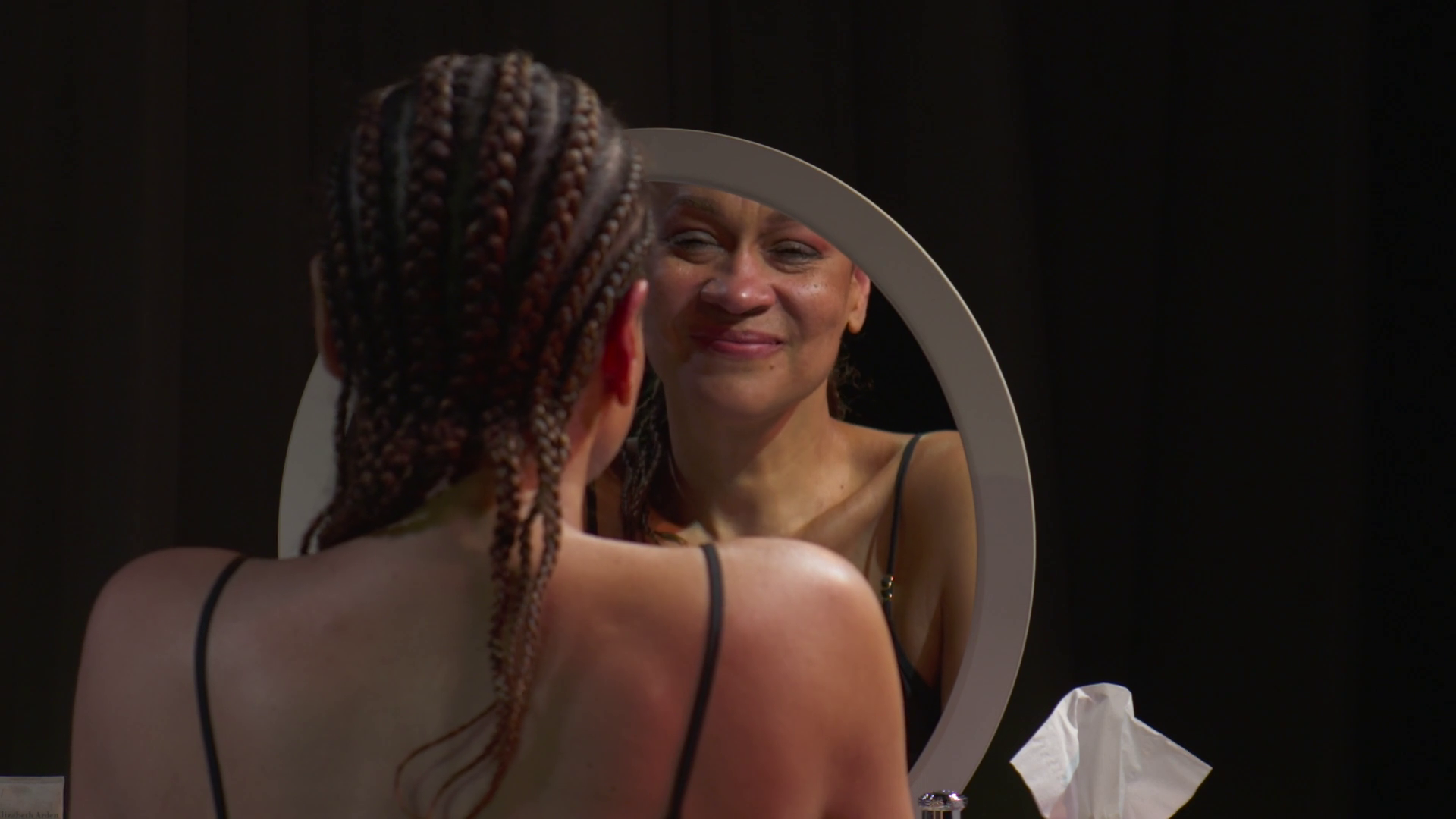
Jonathan Hyde and Sophie Ward

Together they try to direct their man towards a compromise but he’s not taking the jury’s verdict lightly and only makes things worse through his honesty. He ends up on death row and his exchanges with the jailer, played by Robert Mountford multi-tasking superbly as the down to earth everyman who in the modern day may possibly come from Essex and have voted to take back control. If the first half of the play was Socrates against authority, the second is very much the intellectual versus the masses as represented by his affable but irritable goaler who has clearly more than had enough of comfortably well-off philosophical experts.

IThankYou Theatre rating: ***** A pretty much perfect theatrical experience that really allows audience and cast to connect with ancient and modern philosophy at a time when we all need reminding just why society, democracy and culture matters.

Brenton picks his targets with unerring accuracy and hits every one with emphatic skill, entertaining us with every home truth nailed and each complexity left hanging in the air for the penny to gently drop in front of us. It’s another to add to Brenton’s eclectic and lengthy catalogue from Christie in Love (1969), The Romans in Britain (1980), Pravda (with David Hare in 1985) and, more recently, the outstanding Anne Boleyn (2010) with marvellous Miranda Raison as Wife No.2 at Shakespeare's Globe.

The play is part of the JST’s Outsiders Season and I look forward to the next instalment. In the meantime, Cancelling Socrates runs until the 2nd July and will be a very hot ticket so I’d advise you to book as soon as you can!

I’ll leave the last word to Howard: Sartre said that there are three kinds of writers: writers who write for God, writers who write for themselves, and writers who write for other people… I write for other people. The play doesn't reside in heaven, or in a library. As a dramatist, that's your instinct: without other people, the play doesn't exist.


Monday, 9 November 2020

Found in translation… 15 Heroines, The Desert/The War/The Labyrinth, Jermyn Street Theatre


It's typical of Ovid - the wittiest, naughtiest, cleverest writer of his age - that he should spot the chance to express himself through these lesser-told aspects of well-known myths. Forget Theseus - let's hear from Ariadne. Never mind Ulysses' journey- what about Penelope?

In his programme notes, JST artistic director, Tom Littler, discusses the origin of this project and how “imitative” translation, as defined by the poet Dryden, could bring out new elements of existing stories as opposed to what he described as “meta-phrasing”, more literal linguistic transpositions. A bit like literate jazz improvisation versus straight ahead replication of a “standard”; John Coltrane’s endless spontaneity versus Johnny Hodges, who led the saxophone section in the Duke Ellington Big Band in highly structured breaks.

Two thousand years ago, the Roman poet Ovid took the former approach in placing the side-lined heroines of Middle East and Mediterranean oral tradition, centre stage with a series of imaginary letters. These stories were so well known to every Roman and they persist to this day in many aspects of modern culture. One of the oldest books in my family is an Eighteenth Century edition of Ovid’s Metamorphises – featuring some of the characters referred to in these plays - but you don’t have to look far to find stories of Helen of Troy, Jason and the Argonauts, Theseus and the Minotaur.

Patsy Ferran as Ariadne


Having only recently studied an epic German silent adaptation of Helen from 1924 (based on Homer’s take…), I was well placed to contextualise some of the stories but the strength of this production is that you don’t need to know too much of the myth; these stories all resonate not just in the narrative content but also in the way the text connects to recognisable individual concerns. These are women devastated by loss, ignored by so called heroes – just “thugs” as Penelope calls them – who prefer the distractive glory of battle to their domestic responsibilities – and the chase of new loves to the woman left behind.

The plays were rehearsed, performed and filmed live at Jermyn Street Theatre in socially distanced conditions and all capture the intimacy and power of this unique venue. You can almost feel your knees pressing against the seat in front and sense the reactions of the audience packed around you: this is what we’ve been missing!

Remarkably, each piece was performed and filmed live in a single take and this freshness comes across so well as each actor is absolutely in the moment. So many plays though yet whilst each is so different, so is every performance and all are high quality, engaging, warm, sorrowful, funny and, occasionally frightening. The monologues are in three strands with the pays directed variously and expertly, by Tom Littler, Adjoa Andoh and Cat Robey.

Olivia Williams as Hypsipyle, the wife of Jason

The Labyrinth - the women who encountered Jason and Theseus.

Are you friends, are you foes… are you gods?

String by Bryony Lavery features Patsy Ferran as Ariadne, half-sister to the half man-half bull, Minotaur who is wrestling with the fact that her lover has just killed her brother. Ariadne is shocked as she turns to face us before realising that we’re hear to listen to her story. Lavery’s script is literate and witty – I loved the play on words especially when Ariadne “loses her thread” as she discusses the ball of string given to Theseus to prevent him getting lost in the Labyrinth. He found his way out and has gone far beyond yet she is the one now lost even with the string. Ferran is funny and heartfelt, a classical mix. 

Pity the Monster by Timberlake Wertenbaker has Dofia Croll as a fiery Phaedra, Ariadne’s sister, who marries her beloved, Theseus, also the killer of her half-brother… but, of course, she really loves his son Hippolytus. There are so many taboos broken by this woman but she is passionate in seeking “acceptance for desire…”.

Dofia Croll as Phaedra

I imagined you dead… in a nice way… 

I'm Still Burning by Samantha Ellis has Nathalie Armin as Phyllis, married to the son of Phaedra and Theseus, Demophon, another faithless man who forgets to return home after his adventures. Nathalie Armin delivers the poetic truths with passionate deliberations and has the best costume of the show with leaves and branches growing from her head: an excellent physical performance too. The play, as with the story, examines the “political” and Phyllis regrets not writing it all down before any man could; Ovid, Chaucer and the rest betraying her as much as her lover.

Nature is her goddess? Nathalie Armin as Phyllis

Someone in love, is always full of fear…

Knew I Should Have by Natalie Haynes features Olivia Williams as Hypsipyle, the wife of Jason, sat in her home office wondering if her king will ever return after taking up with a new lover on his quest for the golden fleece. It’s another powerful performance with Williams swinging from tender devastation to bitter anger whilst the modern trappings serve only to remind us of the loneliness of the lovelorn; eternally, “tears flow down your fake face…”

The Gift by Juliet Gilkes Romero has Nadine Marshall as Medea, the woman Jason deserted Hypsipyle for and who, herself is now abandoned by him. Honestly Jason, once you’ve had your way and your golden fleece, you’re just not bothered, are you? Medea is now hunted having for so long been the hunter and Marshall’s playing is so poignant.

Nadine Marshall as Medea

The War - untold stories of the Trojan War

You know what I’m like, I can get a little bit extra!

Our Own Private Love Island by Charlotte Jones takes the prize for the funniest play with Sophia Eleni on fire as the laddette, Princess Laodamia of Phylace, aka “Lady P” who is “Greek, innit?” This is the Mycenaean Wars via Middlesex with Helen guilty of having “… broken the Girl Code, ain’t no coming back from that!” It’s not hard to see these characters as being in some kind of reality TV show and with seemingly mundane concerns. Yet all tragedy is mundane and our girl worries about her Prince going to war; “fight for your life and not to win”. Whatever you do, don’t be the first Greek to set foot on the Island of Troy…

Sophia Eleni: Greek, innit?

The Cost of Red Wine by Lettie Precious see Ann Ogbomo as a ferocious Odenone, so in love with Paris and so disappointed in him for choosing Helen. She had sheltered him before and there are clear indications that not only is Helen as “step up” in the world she is also white and Paris is “moving on” in a racially segregated world. It’s a stunning performance from Lettie who leaves nothing left on the stage as she hates and rages always in love… stunning!

Love and loss: Ann Ogbomo 

Perfect Myth Allegory by Abi Zakarian sees Jemima Rooper as Briseis, concubine of Achilles, and a major reason, through no fault of her own, why her man and Agamemnon (Helen’s husband) argued. In this take of men fighting over as much as for women, she takes “joy in being free to wander into a history, I also will make.” She is able to take control of her feelings and use the men’s to her advantage. 

Jemima Roper

Will You? by Sabrina Mahfouz takes another dramatic change of pace and venue as we see Rebekah Murrell as Hermione, being interviewed by the Police in connection of her former husband’s murder of his mother. Hermione’s life is complicated… the only child of Menelaus, and Helen, she was promised to Achilles' son, Neoptolemus even though she truly loved her cousin, Orestes.

Murrell is so assured as she roils her own in the interview room and the narrative soon switches from her character’s resilient confidence to the darker tones of arranged marriage among the upper classes and the marital rape that ensued. The Police support the pointlessly rich and “… we are both as bad as each other”.

Rebekah Murrell 

If you won’t come home for your wife, come home for your sheets…

Watching the Grass Grow by Hannah Khalil features a superb turn from Gemma Whelan as Penelope, waiting for her husband Ulysses to return. Penelope in this instance is a home-working dress-maker whist her man has gone on a team-building exercise, yes, even in the midst of lockdown… Another script that emphasised the eternal truths of love and lies, Whelan’s adept turns of tone brought the tragedy out from her concerns for emails, texts and work/life balance.

Gemma Whelan waiting for the man

The Desert - women going their own way

The Striker by April De Angelis has Indra Ove as an embittered but resilient Deianaria, bemoaning the fall from grace of her husband Hercules Nevile… a fading soccer star who has played away once too often and become “… more like a guest than a husband.” Deianaria has a noble heritage and won’t be shamed as she plans the ultimate reckoning.

Indra Ove, a WAG scorned

In his arms I blossomed… and yet, it was not enough time – the Gods cannot bare to see us happy! 

The Choice by Stella Duffy sees Rosalind Eleazar as Dido, a princess of Lebanon, married to her uncle at 14, “a valued bride…” and raised to rule alongside her brother, Pygmalian. She escaped it all to found Carthage at the age of 25 which is verging on the upper reaches of over-achievement! She gives shelter to Aeneas after he arrives following the end of the Trojan Wars… the two fell for each other deeply. 

The Gods call Aeneas away to Rome – a poor choice versus glorious Carthage – and Dido resolves to settle her own course, divine intervention be damned: “my life, my love, my city my choice…”

Rosalind Eleazar

“I can understand why for some people it might be weird… I’m not an idiot.” 

A Good Story by Isley Lynn features Eleanor Tomlinson as Canace, daughter of Aeolus, god of the winds as she’s interviewed on television about her relationship with her own brother Macareus… which comes as quite the bombshell if you’re not familiar with the story. She has six sisters and seven brothers… and it’s funny/discomforting to hear Canace voice her position with modern sensibilities threaded through a well-worn situation in classical myth! Tomlinson with her delicate nervousness in character, gives one of the most affecting performances for what is in every way a tragedy.

Eleanor Tomlinson

To satisfy our honour, kill your husbands

Girl on Fire by Chinonyerem Odimba sees King Danaus’ daughter Hypermestra, played by Nicholle Cherrie, tasked, along with her 49 sisters, with mariticide… “the knowing lunacy of men!” She is the only one to refuse this slaughter, and waits her day in court having spared her husband, Lynceus. 

The language, as throughout the plays is quite delicious, “I get to write only one letter to you… So much to say, so little papyrus.” Throughout there is an intake of breath repeated off stage, whilst Nicholle gets to sing and has such a lovely tone, I may well have wiped away a tear…

Nicholle Cherrie


I See You Now
by Lorna French has Martina Laird as Sappho, singer and poet for the ages and perhaps the most famous and misunderstood of these women? Here she has come to “the Mother Country” from Trinidad as a 16-year old… years later, she has given up everything for love but must decide whether he adopted country is worth her sacrifice.

Has it come to this? Mere days after Trump was deposed you hope not.

I ripped up pictures of my sister in her nurses’ uniform tending to Britain’s sick for years and years…

Martina Laird

15 Heroines is a suitably epic and richly satisfying journey through these endless concerns and timeless characters, temporally recast in our modern setting. All hail Ovid’s invention but also everyone involved from the players, playwrights, and directors to the whole crew. This is a beacon of welcome hope for an industry under siege and, as with Carthage, one that has many glories to come!

The shows will stream at designated performance times from 7.30pm today, Monday 9th to Saturday 14th November. So, get set for a week of wonders!

The War Mon 9 7.30pm; Thurs 12 7.30pm; Sat 14 3.00pm

The Desert Tues 10 3.00pm; Weds 11 7.30pm; Friday 13 7.30pm

The Labyrinth Tues 10 7.30pm; Thurs 12 3.00pm; Sat 14 7.30pm

Tickets are £20 per household/device and are on sale now from the Jermyn Street website.

IThankYouTheatre rating: ***** Unmissable lockdown theatre, switch on your screen, dim the lights and get swept away by the grandeur of these performances and these naturalistic tales of epic humanity!

Wednesday, 12 June 2019

Revealing to conceal... Pictures of Dorian Gray, Jermyn Street Theatre


I once faked the results of a supposedly un-fakeable psychometric test which frustrated my good friend the HR Director as the facilitator of our workshop suggested that I’d either worked it all out (unlikely) or that I was so deeply subsumed in my work persona I was masking my actual personality. Clearly, it’s not just actors who use the method at work but what if we all hide too much; what becomes of those feelings – our instinctive and moral response to events - if we were able to separate action and emotional response would that take away responsibility as well?

This is just one of the lines pursued in Lucy Shaw’s sparkling adaptation of Oscar Wilde’s only novel, which is given a further twist by Director, Tom Littler having the four cast members rotate their roles.

Shaw has pulled very modern resonance from the story and created a meditation on the poet’s view of art, love and spirit. I read the book a long time ago and my impression remains of a richly worded gothic morality tale in which Gray’s need for sheer experience leaves him exhausted whereas my partner just thought it too arrogant: author failing in one of his chief instructions there: 'To reveal art and conceal the artist is art's aim.”

Augustina Seymour, Stanton Wright and Richard Keightley Credit - S R Taylor Photography
In this play, Dorian succeeds in concealing him/herself so much that he loses touch with responsibility for his actions; the picture takes the hit, measuring the impact of his actions on his soul even though it is hidden away from view. This is spookily done with the players in perpetual motion calling out Wildean motifs as they circle the immediate action – not so much a Greek (Street) Chorus as a Piccadilly one.

Tonight, Helen Reuben was Dorian Gray and she positively glowed with the thrill of a person having set a course for nothing but their own gratification. At first Dorian is happy enough to fall in love with Sybil Vane (Augustina Seymour), a young actress in a tavern theatre who has imagination enough to play all the Shakespearean emotions without having felt them. She and Dorian share a symbiosis and once she becomes aware of her “Prince Charming’s” affection she cannot act anymore as she’s realised how powerful true emotion is.

She’s the inverse of Gray who, once she has revealed this, becomes instantly bored with her: he preferred the fake to reality. Sybil takes her own life in misery at the rejection – imagine how deep that love and that pain? – but Gray quickly dismisses it even as he notes the impact it has made on his soul painting. He’s in it now and the only way forward is obsession and experimentation.

The two Dorians: Stanton Wright and Helen Reuben reversing their roles Credit - S R Taylor Photography
Gray has two great friends, Basil Hallward (Stanton Wright), the earnest artist who paints his incredible picture and the rather louche Henry Wootton (Richard Keightley) who gets most of the best Oscar lines. Henry wants to lead his pal astray whereas Basil is so in love he wants to capture his essence. He is so successful in this, of course, that Gray’s takes the fatal step of declaring he’d give his soul to be able to look as he does in the picture for ever.

The play works on so many levels but is far more mystical than the book, with Augustina Seymour, floating elegantly in a satin evening dress like a spirit on her way to a supernatural cocktail party, catching Gray’s promise in her hand. Littler and Shaw have restored the poetry to Wilde’s prose and made the play broader than the book with less specific meaning. This is where the rotation of genders and actors will make for a fascinating change of emphasis on different viewings – I really must see another combination and watch these superb players change persona again.

Pictures of Dorian Gray plays at Jermyn Street until 6th July - details on their site plus spooky trailer!

Ithankyou Rating: **** It’s a Wilde ride that sparks so many hot takes as you work out new connections between Wilde’s words and his meanings – I used to think Dorian was him but now I’m not so sure; he’s more a part of all of us.

Persona...